FAQ
HistorVin aim is to reduce uncertainty and fraud in the automotive sector by empowering prospective buyers with an informed insight into a vehicle’s history.
The vehicle history provided by HistorVin can be utilized by anyone interested in a safe purchase who wants to avoid potential hidden issues associated with purchasing a used vehicle.
The vehicle identification number (VIN) is a unique code assigned to every motor vehicle when it’s manufactured. Every vehicle built after 1981 has its own VIN that consists of 17 letters and numbers.
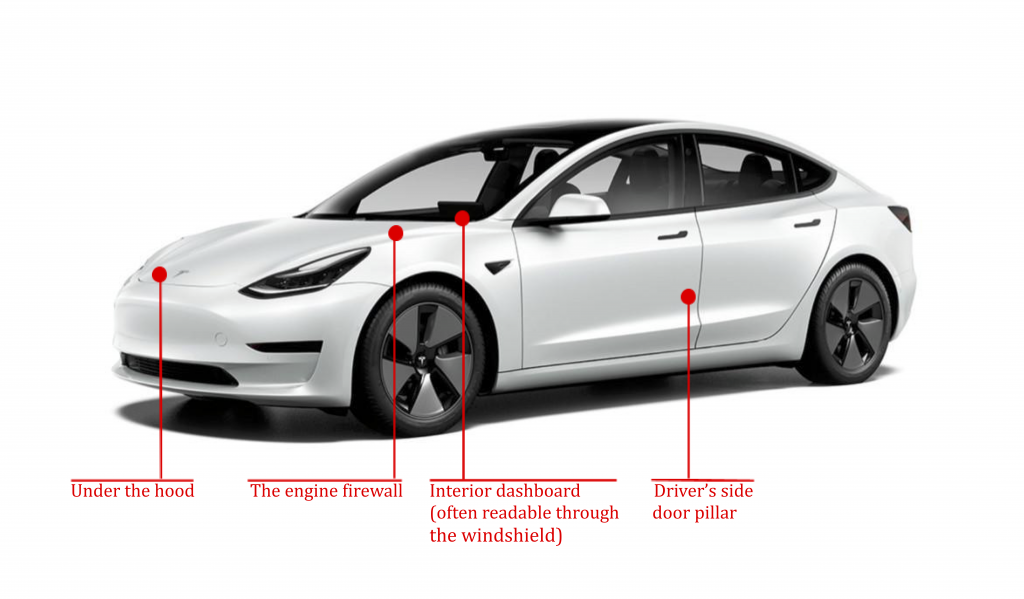
The unique vehicle identification number (VIN) can be found in a number of places:
– Dashboard (often readable through the windshield);
– Inside the door;
– The engine firewall;
– Under the hood.
Also you can find the VIN in documents:
– Vehicle title;
– Service records;
– Insurance policy.
We collect information from many different sources, including state registries, insurance companies, car dealers, auto repair shops, connected vehicle fleets and many more.
VIN decoder scans dealer, repair shop databases, car sales reports, rental companies and provides you with all kinds of information from regular mileage checks to photos of damages.
Here’s what you can get from a vehicle history report:
– Real mileage
– Registration and inspection dates
– Country of origin, model year.
– Information and photos of previous damages
– Previous vehicle usage (as a taxi, rental, police car, etc.)
– Vehicle title checks
– Specific model problems and recalls
– Original equipment
Our vehicle history reports are for personal use only. Customers can not resell our reports.
Check that you have entered the correct vehicle identification number (pay attention to numbers and letters like “0” and “o” or “3” and “8” or “4” and “A” or “5” and “S”). If the VIN is correct and no records are found, it might be that this vehicle has never been registered in the databases that we are checking or the car was manufactured before 1981.